

DigitPay
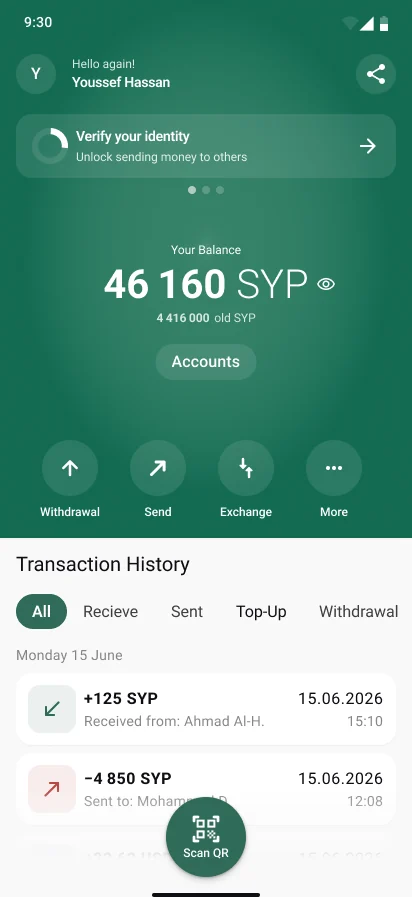
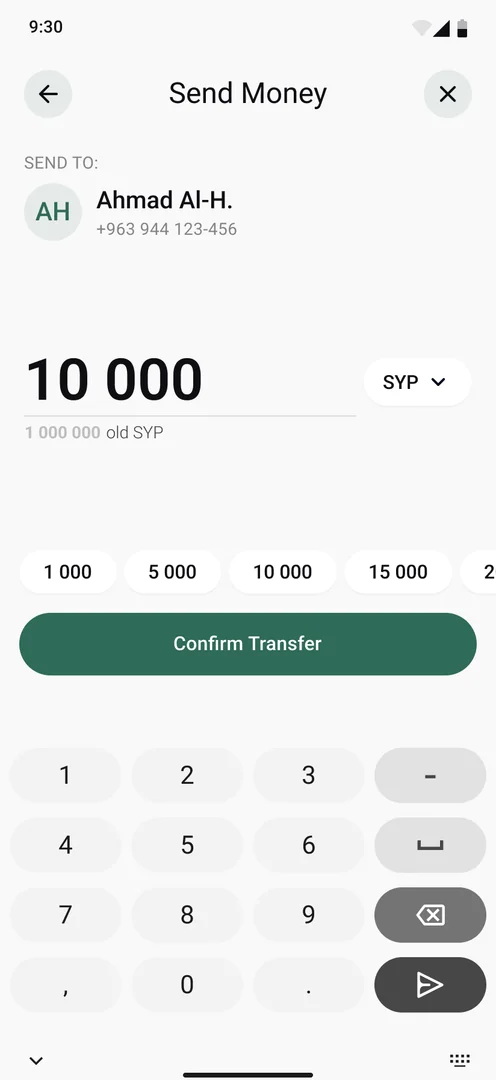
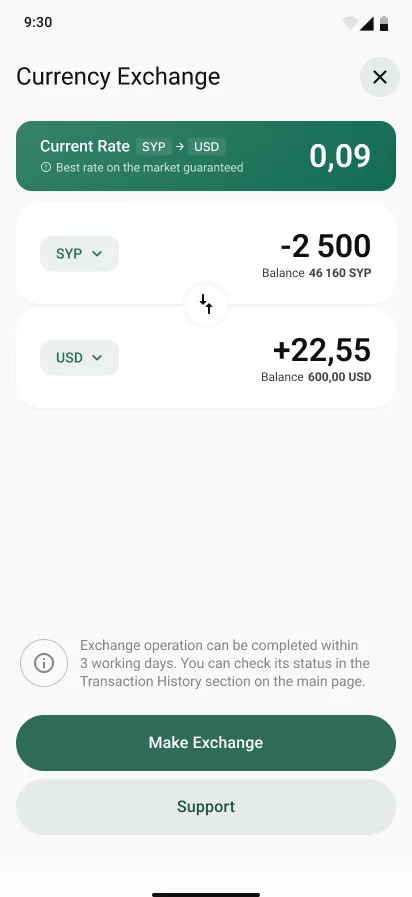
A digital wallet for Syria: peer-to-peer transfers, salary payments, paying for services and buying in shops. After the US lifted its sanctions in 2025 – including the repeal of the Caesar Act that December – the country regained access to international financial infrastructure for the first time in years. The product was built for that opening
My Role
About Product

About
Fintech for a country that just reopened
We started from nothing: no requirements, no comparable products, no research. Nobody on the team knew how money actually works in Syria – how people get paid, what they hand over at a counter, what they trust. Designing a financial product for a market you can’t observe directly was the brief
The work
Working around the absence of dataInstead of a long discovery phase we went for a fast prototype: I built the roadmap, we shipped a working prototype and put it in front of the client and the people around him – people who live inside that market. Their feedback became our research. From there we went deeper in iterations, returning each hypothesis to the same people. That loop answered questions faster than any report would have
QR-based transfersApple Pay and Google Pay aren’t available there – the familiar online alternative simply doesn’t exist. We built the transfer mechanic on QR codes: it sounded strange at first, and it turned out to be the thing that works without fail and reads the same way to a person and to a shopkeeper. Transfers ended up short and fast
Accessibility as the main constraintMost users were meeting this kind of product for the first time. So we simplified to the limit: any function that needed explaining counted as failed. The hardest part remains sign-up – identity requirements don’t allow it to be short, and that’s honestly the most complex piece of the product
Three kinds of usersA consumer app, a separate app for merchants taking payments in shops, and an admin panel for system administrators. Three interfaces, one data model, different levels of trust and permissions
Team
Led a team of 3 designers. I didn’t draw UI: my part was product and UX architecture, specifications, the roadmap and priorities. The project is now run by other designers; I consult the team
Results
Project now in closed beta, invite-only
Up to 1,000 users
~80% successful transfer rate – the product’s key metric
