AI Storytelling Product
An AI-powered interactive storytelling platform where users become the protagonist, shape the narrative through conversations, and unlock personalized content along the way
My Role
About Product

From concept to MVP
Building the product from
the ground up
MVP key metrics
My focus
The first goal was to turn the concept into a complete product experience – from acquisition and discovery to story interaction and monetization. Within one month, we launched the MVP and established the core product loop that became the foundation for further growth
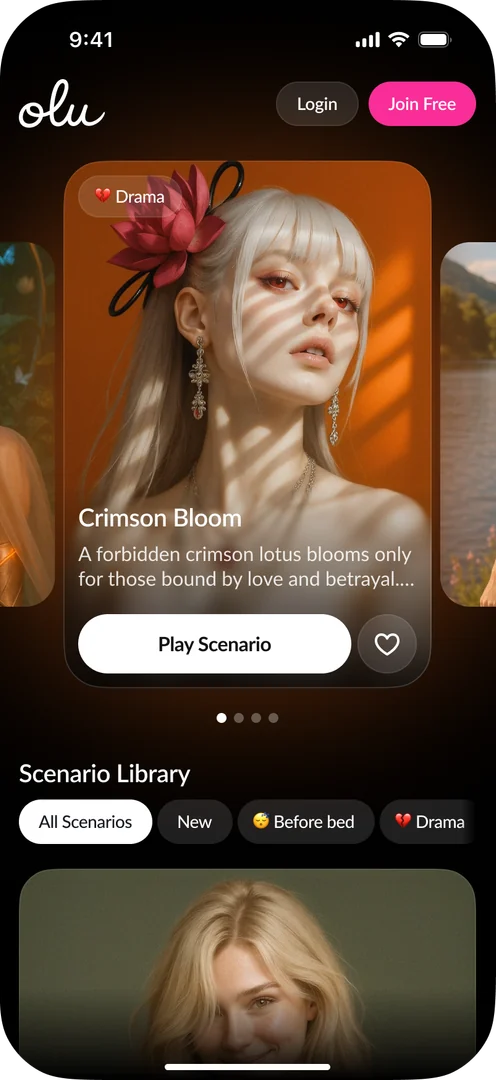
Story Discovery
See more79% of visitors started a scenario
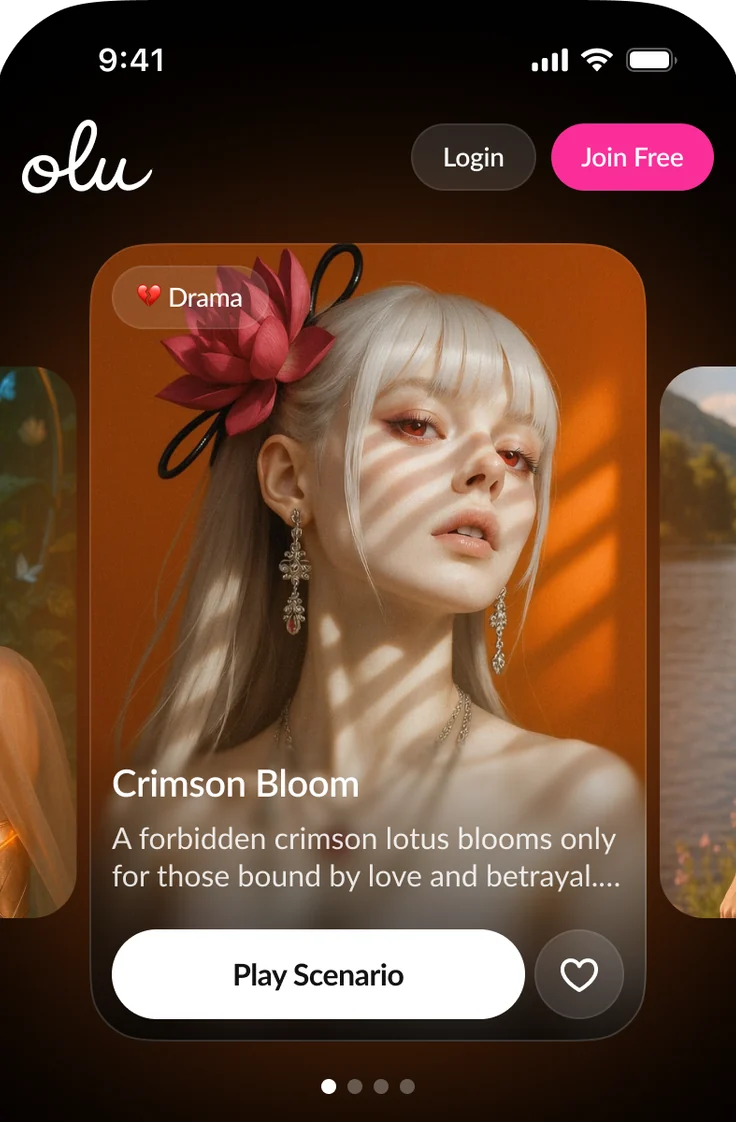
Why it shipped first:
An interactive story product has to answer one question in the first seconds – what will you play?
Solution:
A gallery of scenarios as the entry point: cover, genre, a one-line hook. We led with mood and premise rather than mechanics, so choosing felt like picking a story, not configuring a tool.
Effect:
79% of visitors started a scenario – discovery wasn’t a menu, it was the first act of the story.
 Flip back
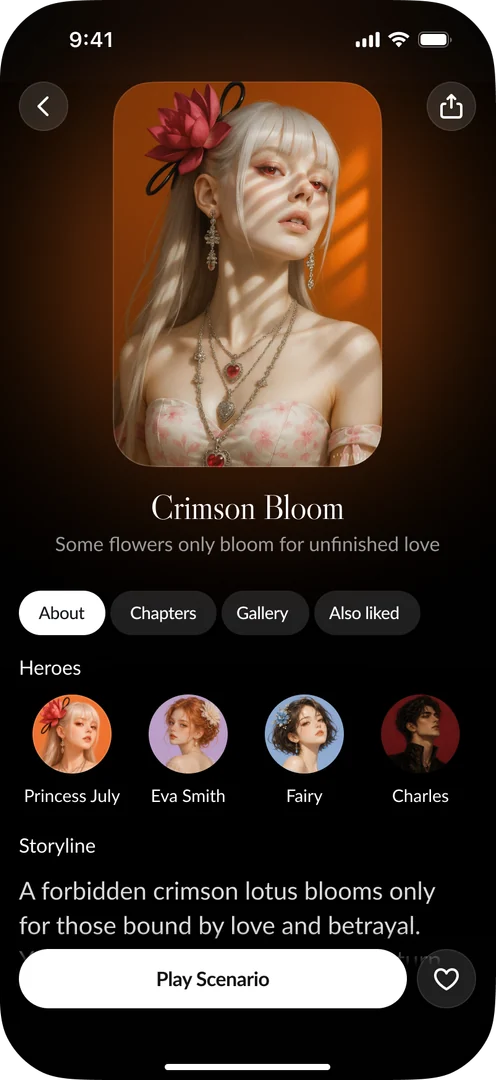
Scenario Preview
See more~30 sec from entry to first scenario
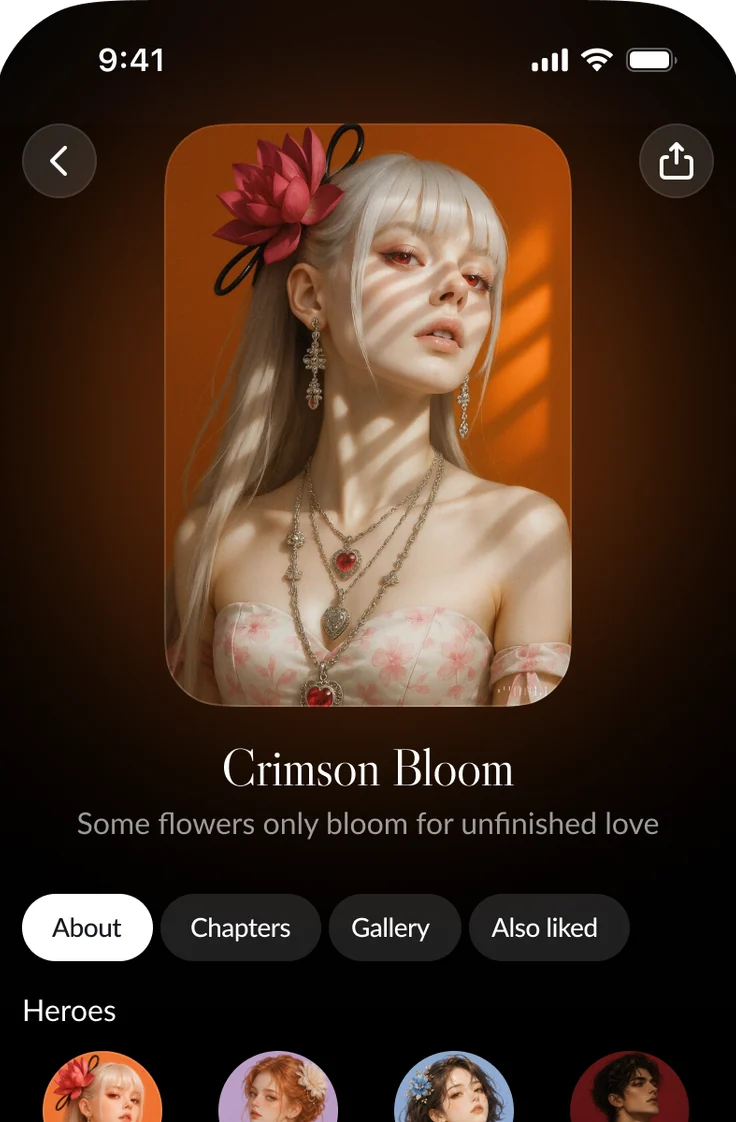
Why it shipped first:
A cover pulls attention, but committing to a story needs a look inside first – people wanted to know who they’d be talking to before they started.
Solution:
The scenario screen before the start: synopsis, heroes, tone, plus “also liked”. Enough to set expectations without spoiling the story. “Also liked” caught the case where the genre landed but the character or synopsis didn’t – a second route to a start.
Effect:
~72% conversion from preview into the story, after browsing 4–5 scenarios first. Half of all starts came straight from the gallery; “also liked” added another ~10% on top.
Flip backCore Story Experience
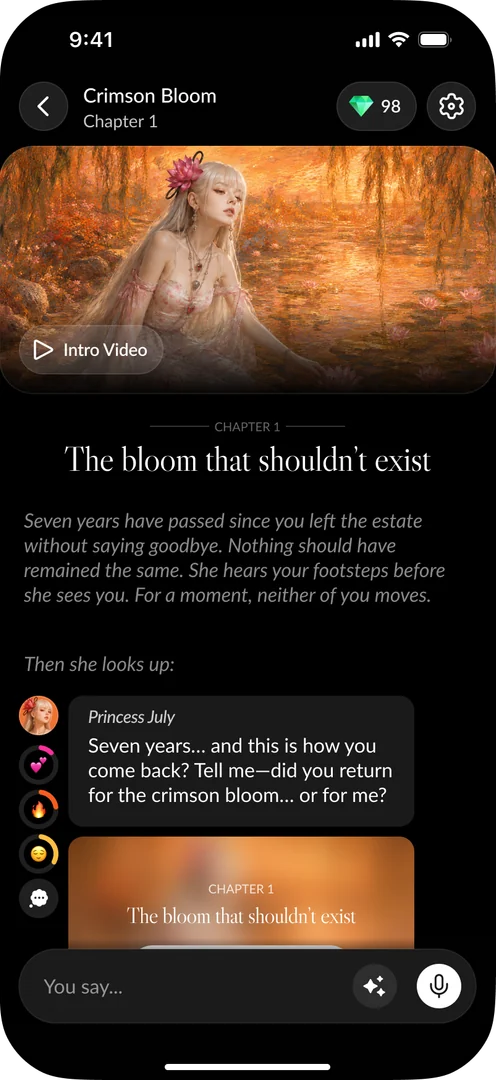
See more~25 min avg. session at MVP
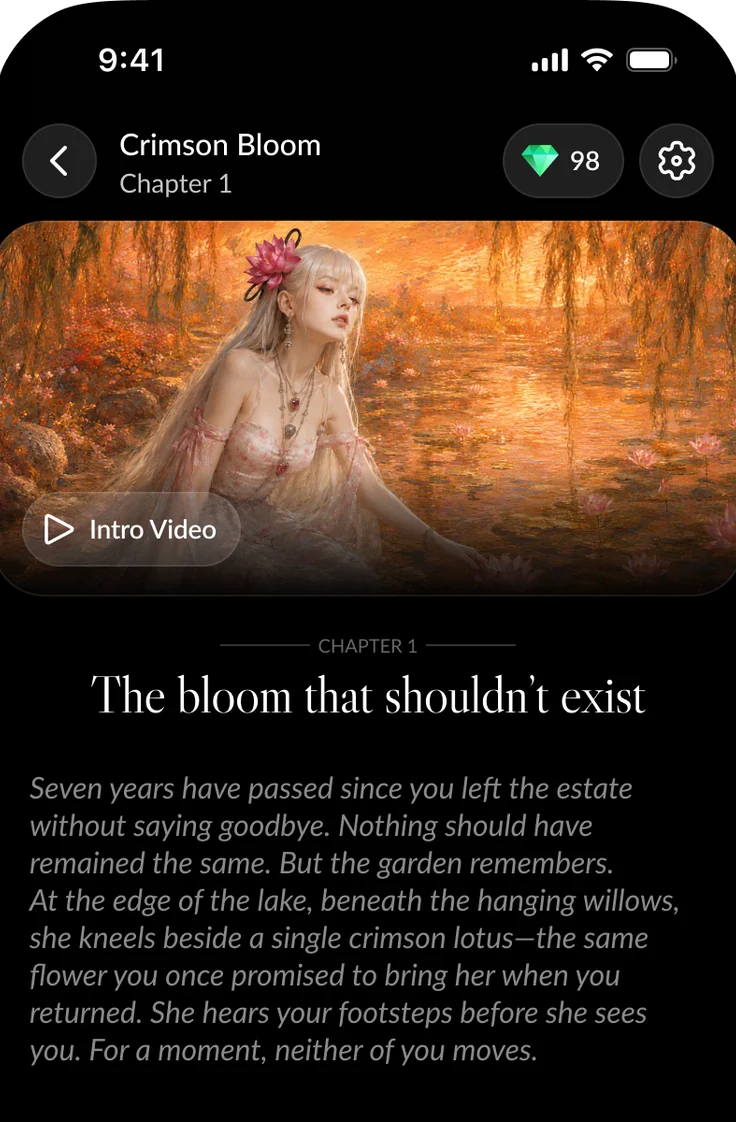
Why it shipped first:
Everything else exists to get here – the conversation is the product.
Solution:
An interactive chat where the user drives the story through their own replies. Free reading was capped: 10 messages unregistered, 40 more after sign-up, then subscription – the limit refreshing every 24 hours. The cap was tuned to let the story hook you before it asked for anything.
Effect:
~40 min average session at MVP. About 90% of players reached the sign-up wall, and 60% of them registered to keep reading; roughly 6–8% went on to subscribe.
Flip backGrowing the core experience
Turning initial engagement into deeper interaction
Key achievements
My focus
After launch, the focus shifted from building the core product to increasing interaction depth. I iterated on AI behavior, in-product activation and pricing to make each session more relevant, longer and more valuable
The result was a shift from consuming more stories to spending more time – and more money – inside each experience
Dynamic Character Emotions
x2 spend per scenario


Trigger:
Characters behaved too linearly, and users didn’t always read their emotions – the person on the other side felt flat.
Solution:
We introduced a three-emotion model, rewrote every prompt, and made the LLM not just answer but think and feel – surfacing that state in the interface. At hard forks the user could even see what the character was thinking. A single conversation gained real depth.
Effect:
x2 spend per scenario, and messages per dialogue climbed to 80–100+. People paid to stay in a conversation that finally felt alive.
Flip backIn-product Activation
Feed → Story Activation +10%
Trigger:
With so many scenarios to choose from, people could browse for a long time and never commit to one.
Solution:
We added invites that appeared once a user spent more than 3 minutes on the listing without choosing anything – a gentle nudge that turned indecision into a start instead of leaving them stuck in the gallery.
Effect:
Activation into a story +10% – the nudge caught exactly the people about to leave without ever playing.
Flip backPricing Strategy
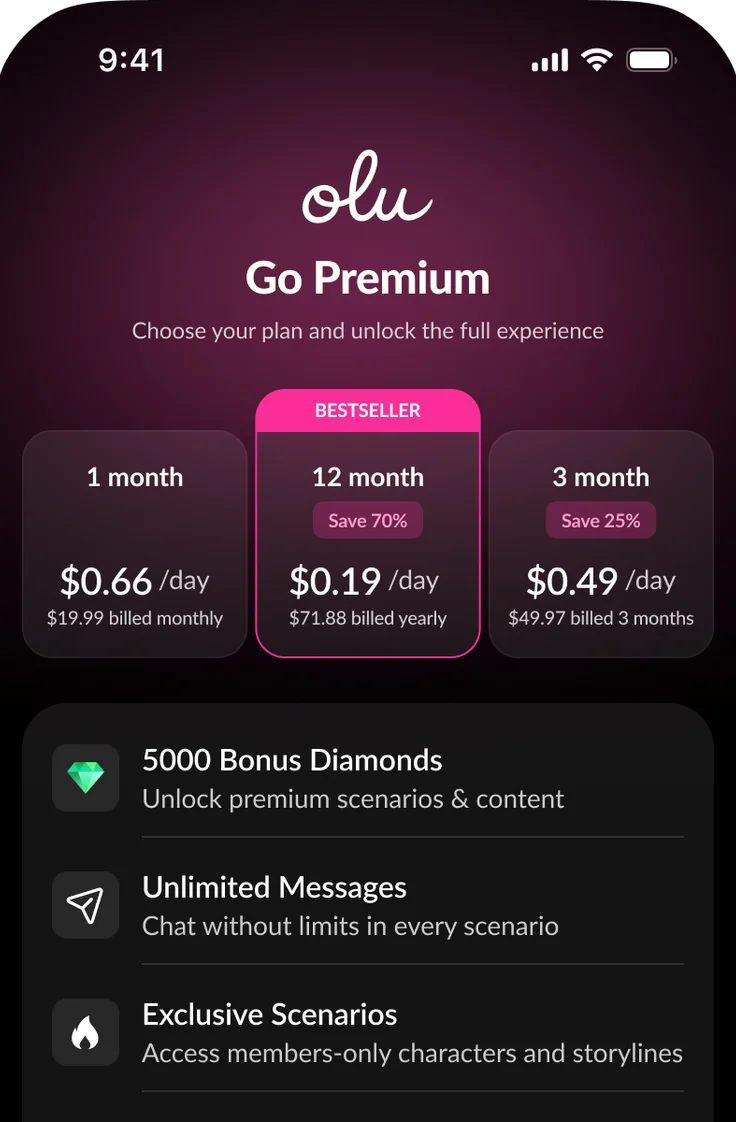
Paywall conversion: 8% → 22%
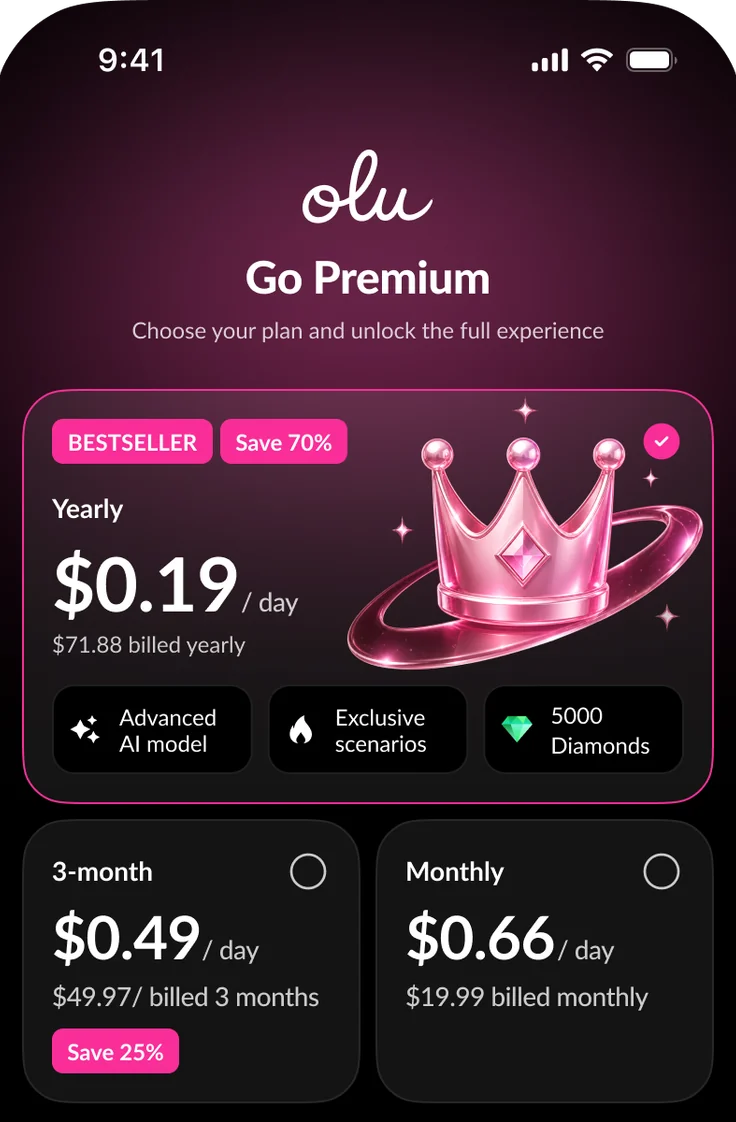



Trigger:
The product already had several plans, but the paywall showed them as a flat price list – nothing guided the choice or made the value land.
Solution:
We rebuilt the paywall to actually sell: per-day pricing instead of a monthly lump sum, a clear bestseller tag, explicit discounts, and reworked benefit packages. Same plans – framed so the value was obvious at a glance.
Effect:
Paywall conversion 8% → 22%. Annual plans went from under 1% of purchases to around 20% – the framing moved people toward the longer commitment.
Flip backExpanding the product
Creating new reasons to return
Key achievements
My focus
With the core experience established, I moved into larger product bets focused on personalization, reactivation and richer interaction formats. These experiments gave users more control over the experience and created new reasons to return and spend
Custom Scenarios
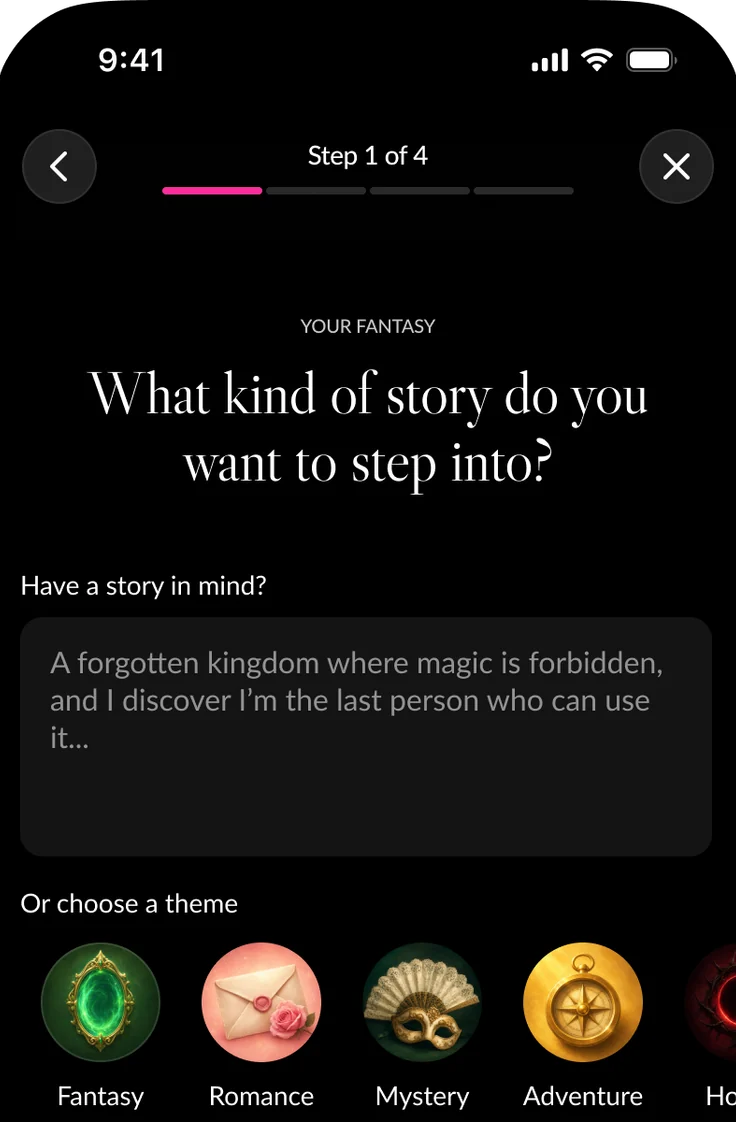
See moreD7 paid retention 15% → 36%
Trigger:
From the MVP on we could see it: people wanted to live out their own fantasies and plots, not only the ones we wrote for them.
Solution:
We let users build their own scenarios – the same interactive engine, but the story was theirs to set up. It was the natural way to expand the product without diluting what worked: instead of us writing more content, players wrote the content they actually wanted.
Effect:
Retention held at the product’s core levels – 40% for paying users, 15–20% for free. Their own scenarios ran deeper too: around 10% more messages per dialogue than in the ready-made ones, and 12–15% of paying users came back to them.
Flip backLive Scenarios
See more+20% session length



 98
98
Trigger:
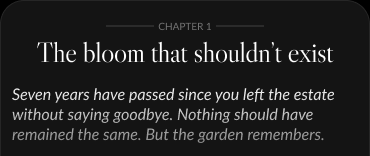
Not everyone likes to read. We had media in the scenarios, but it was mostly static or short – and in the middle of a fantasy, imagination needs a picture to stay pulled in.
Solution:
We turned scenarios into short per-chapter videos, refreshing a couple of times inside a chapter at the key story beats, with narrator and actor voiceover. The video could be made contextual to what was happening – and that became something worth paying for on its own.
Effect:
+20% session length – a moving picture held people inside the story longer than text could. Around 10% paid for contextual video on top.
Flip backTargeted Offers
See more20% of free users monetized at least once

Trigger:
Some users kept coming back without ever buying, and cancellations left in silence – no chance to keep them or learn why they went.
Solution:
We built a targeted monthly offer – 50% off a new subscription or a renewal – aimed especially at people on their way out. It doubled as a feedback channel: in exchange for a cheaper renewal we could read why they were leaving. Live Scenarios came directly out of it – people wrote plainly that the reading wore them out, while everything else was fine.
Effect:
20% of free users monetized, and 10–15% of churned users won back. The offer didn’t just recover revenue – it turned churn into the insight that shaped the next feature.
Flip backOutcome
From an experiment to a sustainable product
Over 1 year, the product evolved from an early concept into a mature AI storytelling experience with a working acquisition model, strong engagement and repeat usage
My work covered the full product lifecycle – from 0→1 and launch to analytics-driven growth, retention, monetization and exploration of new product direction
Content and branding anonymized due to NDA